Drone Defense Control Gap Highlighted
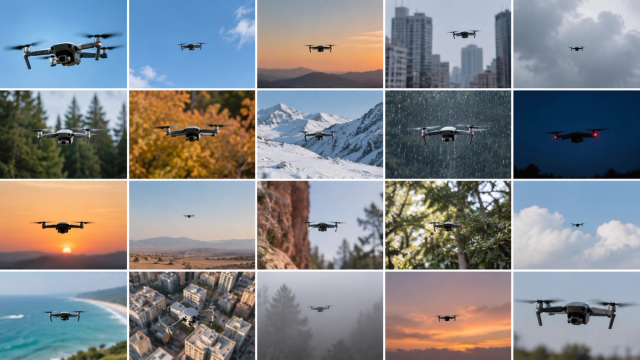
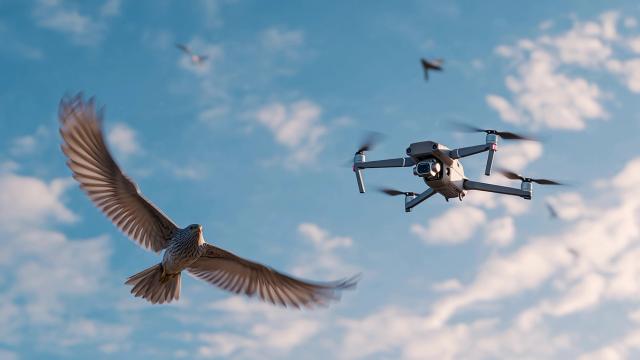
As drone systems scale faster than the infrastructure designed to manage them, a widening control gap is beginning to emerge between persistent aerial activity and the ability to respond to it effectively.

Summary
This article examines the growing control gap within modern drone environments as aerial systems become cheaper, more accessible, and more continuously deployable. It explores how persistent activity can strain sensing, identification, response capacity, legal authority, and operational continuity; why cost asymmetry can amplify those pressures; and how distributed protection models may complement centralized systems by supporting localized, persistent awareness.
Drone systems are becoming increasingly accessible, scalable, and operationally flexible. Capabilities once concentrated primarily within state and military environments now extend across commercial, industrial, public-safety, and decentralized applications. At the same time, low-cost systems can be adapted and deployed at volumes that place new pressure on the infrastructure responsible for monitoring and managing the airspace.
The challenge is not defined only by individual incidents. It is increasingly shaped by volume, repetition, and persistence. As discussed in our examination of why detection alone is insufficient (opens in a new tab), identifying aerial activity is only the beginning of effective drone defense. It is increasingly shaped by volume, repetition, and persistence. Recent counter-UAS analysis (opens in a new tab) has emphasized that small drones combine wide proliferation and relatively low cost with increasingly capable sensors, payloads, and mission profiles, complicating detection, tracking, command and control, and interception.
The result is a growing imbalance between the scale of aerial activity and the systems responsible for maintaining awareness and response capacity. This imbalance can be understood as a drone defense control gap.
The Emerging Drone Defense Control Gap
A control gap emerges when the speed, scale, and persistence of aerial activity exceed the practical capacity of existing infrastructure to continuously monitor, identify, assess, and manage it. Many protection architectures were developed around discrete incursions or clearly bounded events. Persistent and distributed activity challenges those assumptions because the demand on sensors, operators, decision systems, and response resources does not end when one incident is resolved.
The problem is visible even in highly resourced environments. A 2026 CSIS analysis of U.S. counter-drone preparations for the FIFA World Cup noted (opens in a new tab) longstanding constraints in authorities, command architecture, coverage, and response capacity, while also emphasizing that civilian venues impose safety and airspace-deconfliction requirements that differ substantially from battlefield conditions.
The challenge, therefore, is no longer simply detecting a drone. It is sustaining reliable environmental awareness and decision-making when activity is persistent, distributed, and mixed with legitimate aviation.
Economic Asymmetry Accelerates the Imbalance
Economics can widen the control gap. Low-cost drones can be produced and deployed at scale, while some traditional defensive responses rely on expensive interceptors, specialized personnel, limited inventories, or centralized systems. CSIS has repeatedly cautioned that simple cost-per-drone comparisons do not capture the full value of air defense (opens in a new tab), but the underlying cost-exchange problem remains relevant when inexpensive systems are deployed in large numbers.
Recent analysis of mass drone attacks has reinforced the need for lower-cost defensive layers. CSIS noted in 2026 that Ukraine increasingly uses inexpensive interceptor drones at scale (opens in a new tab) to preserve higher-end interceptors for more demanding threats, illustrating how defensive architectures are adapting to persistent volume rather than relying on a single response mechanism.
Persistent activity therefore creates pressure across multiple layers at once: sensing, tracking, identification, operator workload, response inventory, decision speed, and operational continuity. The relevant issue is not that inexpensive drones automatically defeat more expensive systems; it is that scalable aerial activity can force defenders to manage cost, capacity, and coverage continuously.
Why Centralized Defense Models Struggle to Scale
Centralized defense systems remain essential, particularly for strategic air defense and environments requiring wide-area coordination. But centralized capability alone may not provide persistent awareness across every localized environment exposed to small-drone activity.
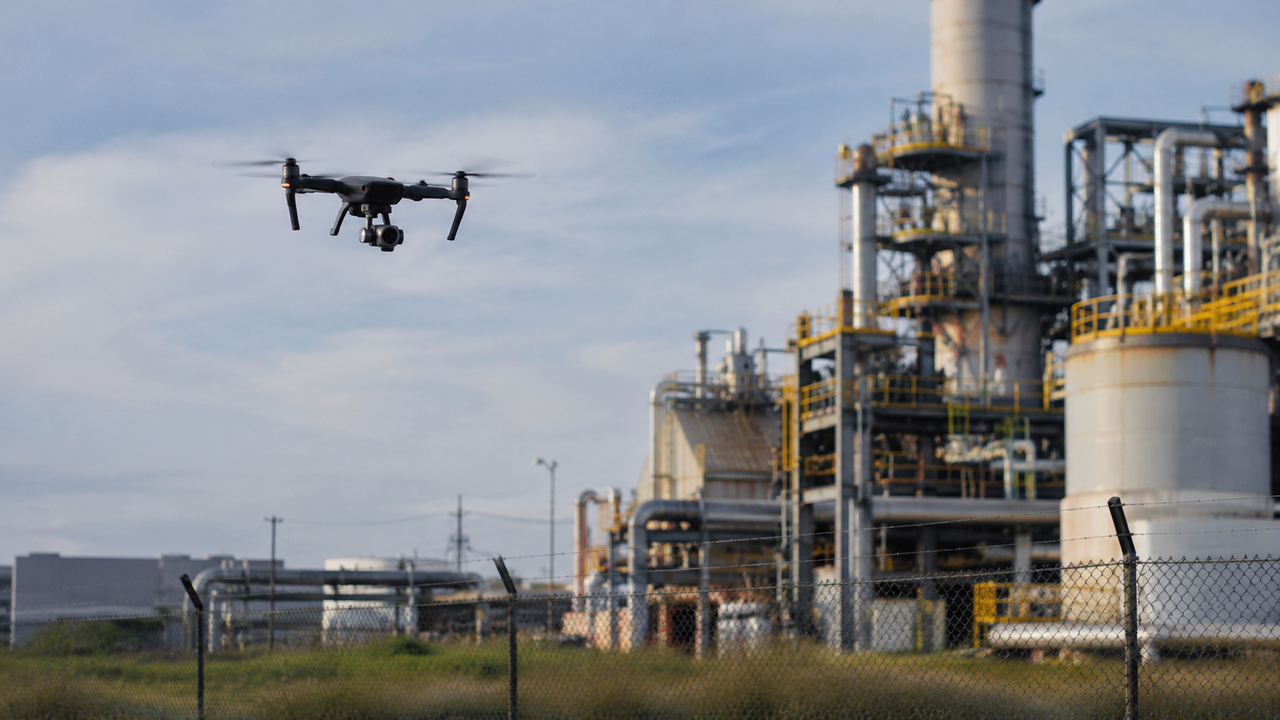
That limitation becomes more visible as protection requirements expand from military sites to airports, utilities, logistics facilities, public venues, and other critical infrastructure. In September 2026, Lithuania announced that a key electrical substation near Kaliningrad (opens in a new tab) was being fortified against drone and sabotage threats, adding redundant systems and physical protection at significant additional cost. The example illustrates how aerial risk can translate into site-specific infrastructure investment rather than a single centralized defensive solution.
For civilian environments, the problem is also constrained by law and safety. Detection, identification, tracking, mitigation authority, airspace deconfliction, and the consequences of bringing a drone down can vary considerably by location. A scalable protection model therefore has to account for both the technical problem and the operating environment around it.
What Is a Drone Defense Control Gap?
A drone defense control gap is the mismatch between the scale and persistence of aerial activity and the practical ability of available systems, authorities, personnel, and infrastructure to maintain continuous awareness and an appropriate response. The gap is not solely technological. It can be operational, economic, legal, and infrastructural.
Framing the problem this way matters because it shifts attention from the individual drone to the capacity of the surrounding protection system. A site may be capable of responding to one incursion yet still lack the sensing coverage, decision architecture, staffing, or authorized response options required to manage repeated or simultaneous activity over time.
Toward Distributed Environmental Stability
As this control gap widens, protection models may increasingly combine centralized coordination with more localized sensing and response layers. As this control gap widens, protection models may increasingly combine centralized coordination with more localized sensing and response layers. This reflects the broader shift toward infrastructure-focused drone defense (opens in a new tab), where persistent awareness and operational continuity become as important as responding to individual incursions. Distributed protection emphasizes persistent awareness within defined operational boundaries, placing detection, identification, decision support, and—where legally authorized—response capabilities closer to the environment being protected.
The objective is not domination of the airspace. For civilian and infrastructure applications, it is operational stability: maintaining awareness, distinguishing routine activity from meaningful risk, and supporting proportionate action without introducing unnecessary harm.
Conclusion
As aerial systems continue to scale, the environments best positioned to maintain stability may be those that can sustain localized awareness while remaining connected to broader command, regulatory, and security frameworks. The control gap is ultimately a capacity problem: how to maintain visibility and decision quality when the activity being managed becomes cheaper, more distributed, and more persistent.
That makes presence as important as interruption. Effective drone defense will increasingly depend not only on the ability to stop an individual event, but on the ability to understand and manage the aerial environment continuously.

Umbrella Aerospace
Umbrella Aerospace explores adaptive approaches to aerial security, autonomous detection, visual intelligence, and counter-UAS systems designed around responsible innovation, operational stability, and the protection of people and critical environments.